
Who the Montgomery County Clerk Is and What Records the Office Keeps
The Montgomery County Clerk is L. Brandon Steinmann. The office sits at the heart of county recordkeeping. You can reach the main line at 936-539-7885 or email CountyClerk@mctx.org. Staff handle filings, copies, and searches, but they cannot give legal advice.
This office keeps a broad set of records. It holds county court at law files, probate records, and commissioners court minutes. It also keeps official public records. Those include deeds, assumed names, livestock brands, foreclosures, liquor license filings, and military discharge forms. On top of that, the clerk keeps vital records. Think birth, death, and marriage records. That is a lot of ground for one office.
Think of the County Clerk as the county's main book of record. A deed gets recorded here. A will gets filed here. When a couple gets a marriage license, the clerk issues and records it. The official site groups its work into Courts, Public Records, Vital Records, and Public Search. You can see those groups on the County Clerk website.
The Split Clerk System in Montgomery County Court Records
Texas uses a split clerk system. Montgomery County follows that model. There are two clerks, and each keeps a different set of court records. The County Clerk is one office. The District Clerk is the other. Knowing the line between them saves you a wasted trip.
The County Clerk keeps county court at law records, probate records, vital records, and official public records. The District Clerk keeps the district court records. Felony cases go there. Divorce and family cases go there. Major civil suits go there too, not here. Melisa Miller serves as District Clerk. That office runs its own portal and counter. You can read about it on the District Clerk page.
So which file goes where? A misdemeanor county case, a probate estate, a marriage license, or a recorded deed belongs to the County Clerk. A felony, a divorce, or a big civil judgment belongs to the District Clerk. If a search comes up empty at one office, the file may sit with the other. For the full picture of how both portals work together, see the main court records page.
Montgomery County Clerk Office Locations and Hours
The County Clerk runs three public offices. The main office sits in Conroe. Two annex offices serve the south and east ends of the county. All three share the same phone, 936-539-7885. Hours are not the same at each spot, so check before you go.
The Conroe main office keeps the longest hours. The East County Annex in New Caney closes for lunch, so plan around that gap. The South County Annex in The Woodlands stays open through the midday but shuts a half hour earlier than the main office. Pick the office that fits your record and your route.
Main Office, Conroe
210 West Davis (Hwy 105)
Conroe, TX 77301
936-539-7885
Monday-Friday 8:00 a.m.-5:00 p.m.
East County Annex
21130 Legion Rd
New Caney, TX 77357
936-539-7885
Monday-Friday 8:00 a.m.-4:30 p.m., closed for lunch 1:00-2:00 p.m.
South County Annex
1520 Lake Front Circle
The Woodlands, TX 77380
936-539-7885
Monday-Friday 8:00 a.m.-4:30 p.m.
Note: The East County Annex in New Caney closes from 1:00-2:00 p.m. each weekday for lunch.
Montgomery County Clerk Vital Records
Vital records are some of the most asked-for files. The County Clerk handles three main kinds. You can get a marriage license, a birth certificate, or a death certificate here. Each one has its own form and its own fee. The office posts those forms and fees on its site.
A marriage license is issued and recorded by this office. Texas Family Code Chapter 2 sets the rules for who can apply and the waiting period after a license is issued. Couples who finish a Twogether in Texas premarital course may pay less. After the ceremony, the signed license comes back to the clerk. Then it is recorded. You can read more on the marriage and divorce records page.
Birth and death certificates are kept here too. State access rules apply. Not just anyone can pull a recent birth record. Texas limits those to the person, close family, and a few others with a legal interest. Bring a valid photo ID. Be ready to show how you qualify. The clerk can hand you the right form and tell you what to bring.
Official Public Records and Recorded Instruments at the Montgomery County Clerk
The County Clerk is the county recorder. That means deeds, liens, plats, and other land documents get filed and indexed here. The office also records assumed names, also called DBA filings, for people who run a business under a name that is not their own. Livestock brands, foreclosure notices, and liquor license filings land here too.
One filing many veterans need is the DD-214 military discharge. The clerk records it. Later, the veteran or their family can get a free certified copy. The office groups these under Public Records on its site. The County Clerk site lists each type in one place, from assumed names to recording forms.
To look up a recorded document, use the Official Records Search. This free tool lets you search by name, document type, or document number, and you can narrow by recorded date. The search runs on the official County Clerk portal. For a deeper guide to land and other recorded files, see the public records page.
Below is a quick map of the fields you will see on the Official Records Search screen. Most are optional, which lets you start broad and then narrow as you go.
| Field | Type | Required | Notes |
|---|---|---|---|
| Search Term | Text | No | Grantor or grantee name, subdivision, document type, or document number. |
| Date Range | Date range | No | From and to dates based on recorded date. |
| Quick Date filters | Buttons | No | Last 24 hours up to last 1 year. |
| Search Scope | Radio | No | Index only, or index plus full text (OCR). |
| Search | Button | No | Runs the query. |
| Reset | Button | No | Clears the form. |
The scope choice changes what you find. Index only looks at the fields the clerk typed in, like a name or a document number. It treats each word on its own. The full-text OCR option reads the scanned text inside each document. It treats two or more words as a phrase. Pick the one that fits how much you already know.
Screenshot source: countyclerk.mctx.org
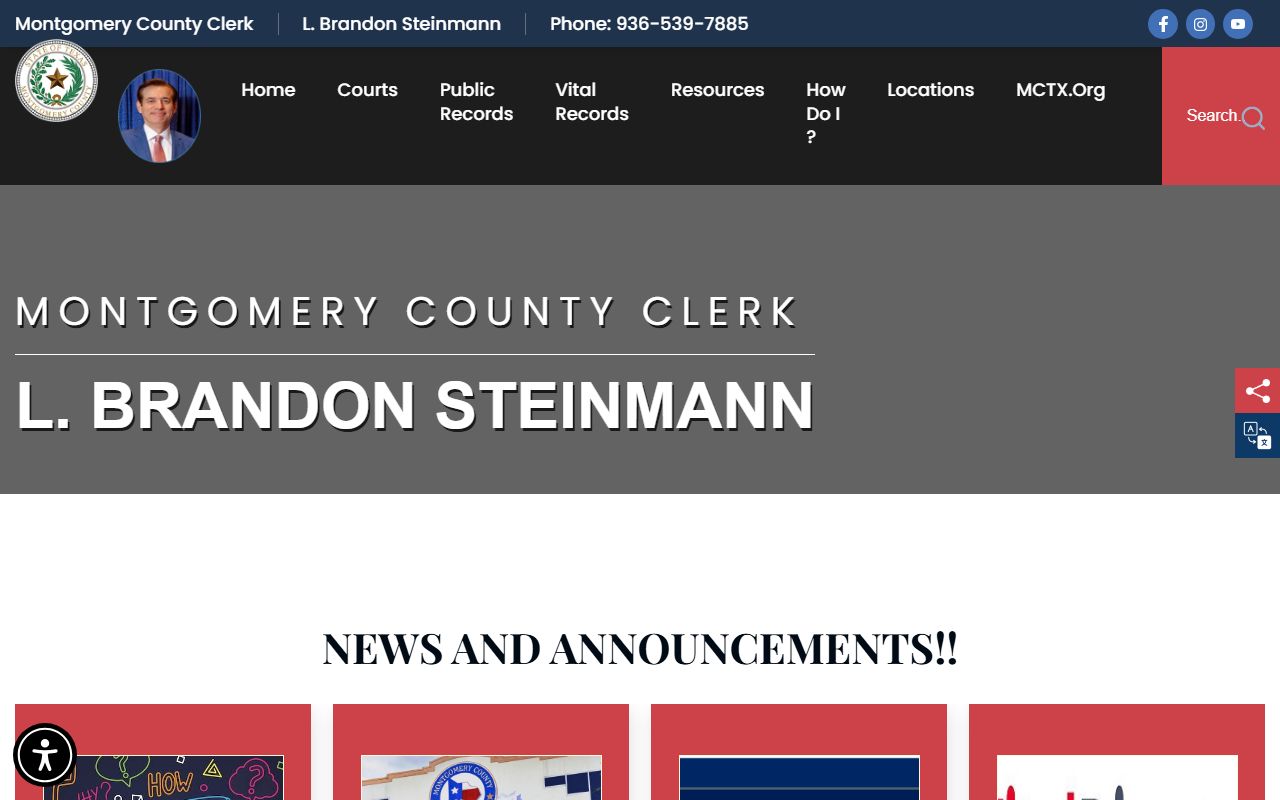
The branded County Clerk site gathers courts, public records, vital records, fee sheets, and the public search links in one spot. It is the best front door for most County Clerk tasks.
Montgomery County Clerk County Court and Probate Records
The County Clerk keeps the records for county court at law cases and for probate. These run on a separate Odyssey portal from the District Clerk. The system looks much the same, but it holds different files. Use the County Clerk Odyssey site for county misdemeanor, county civil, and probate matters.
Probate is a big part of this office. When someone dies, the estate often passes through probate. The clerk keeps the application to probate a will, letters testamentary, heirship findings, small estate affidavits, guardianship files, inventories, and the orders the court signs. Most estate files are open to the public. Guardianship and some financial or medical details may be restricted. For a fuller walk-through, see the probate records page.
To search a county or probate case, open the County Clerk Odyssey portal and pick a location first. The menu reads All County Courts, Criminal Records, Civil and Probate Case Records, and Court Calendar. Choose Civil and Probate for an estate or guardianship file. Then search by case number or party name. You can open the County Clerk Odyssey portal to begin.
How to Request a Certified Copy from the Montgomery County Clerk
A certified copy carries the clerk's seal and a statement that it is a true copy. Courts and agencies need that seal for legal use. A plain printout or a screen grab will not do. Here is how to ask for one at the County Clerk.
Have your details ready before you start. The more you can name, the faster the clerk can pull the file. A vague request can draw delay or a cost estimate.
- Decide which record you need: a marriage license, a birth or death certificate, a recorded deed, or a county or probate case file.
- Confirm the County Clerk holds it, not the District Clerk. District court files go to the other office.
- Gather the key facts: full names, the document or case number, and the file or record date.
- Check the FY25 vital or recording fee sheet so you know the cost up front.
- Bring a valid photo ID, since some vital records limit who may get a copy.
- Visit a County Clerk office during posted hours, or ask staff about mail or online request options.
- Pay the fee and get the certified copy with the clerk's seal.
If you cannot come in, call 936-539-7885 first. Staff can tell you whether a mail or online request fits your record. They can also confirm what ID or proof you need to qualify for a vital record.
Montgomery County Records Kept by Other Offices
Not every public record sits with the County Clerk. Some belong to other offices, and going to the wrong counter wastes time. A few common requests get sent elsewhere, and it helps to know that up front.
District court records are the clearest example. Felony cases, divorce, and major civil suits go to the District Clerk, Melisa Miller, not the County Clerk. Use the District Clerk page to reach that office and its portal.
Driver records are a state matter. The County Clerk does not keep your driving history. You order that through the Texas Department of Public Safety driver record portal. A court result may flow to DPS. But the record itself lives with the state, not the county.
Screenshot source: txapps.texas.gov
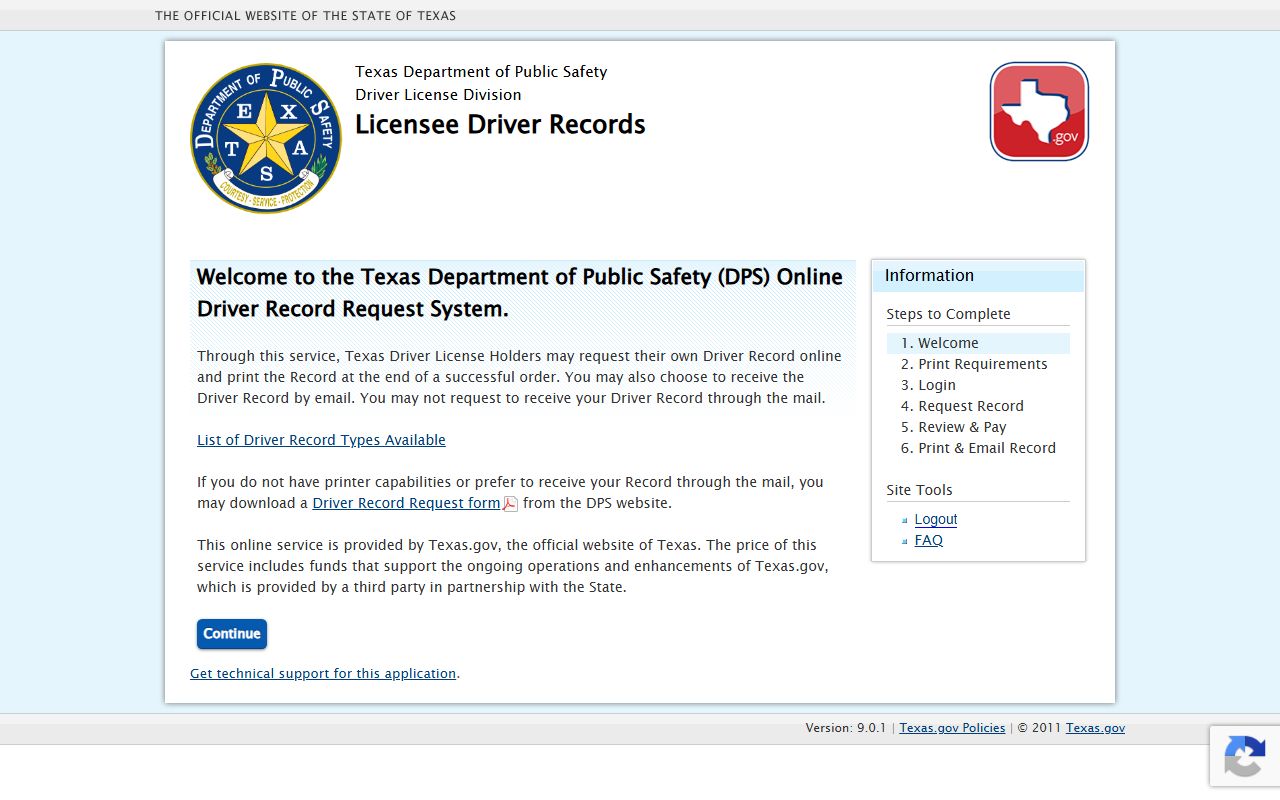
The state DPS site shown above is where driver records get ordered. The County Clerk cannot pull these for you. Did a court tell you to check your driving record? This is the right tool.
Jail visitation is another task that sits outside the clerk. The County Clerk does not schedule visits. It does not track who is in jail. The Sheriff runs that through an online scheduler. Inmate and booking data are Sheriff records, not court files.
Screenshot source: mcsojailvisitation.mctx.org
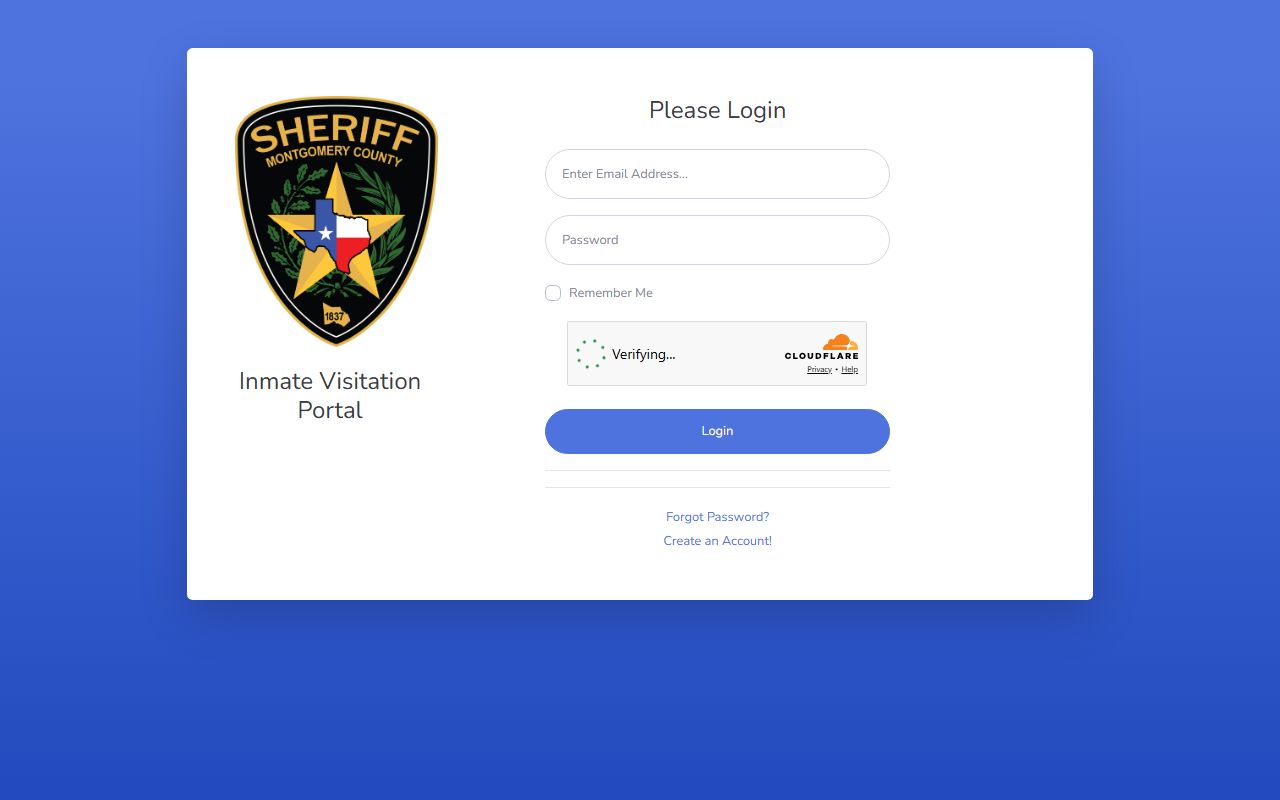
The Sheriff's scheduler above handles visit times and rules. For a clerk's office, point any jail or inmate question to the Sheriff instead. That keeps your record search on track.
Montgomery County Clerk Fees and Copies
Fees change, so we will not print dollar figures here. The County Clerk posts current amounts on two FY25 fee sheets. One sheet covers vital records like marriage, birth, and death. The other covers recording and copies of recorded documents. Check the right sheet before you pay.
The table below maps each common item to the fee sheet that lists its amount. Use it as a guide to find the exact cost, then confirm on the official sheet. Staff at the counter can also tell you the current fee.
| Item | Where to Confirm the Amount |
|---|---|
| Marriage license | FY25 Vital Fee Sheet |
| Birth certificate | FY25 Vital Fee Sheet |
| Death certificate | FY25 Vital Fee Sheet |
| Certified copy | FY25 Vital or Recording Fee Sheet, by record type |
| Recorded document copy | FY25 Recording Fee Sheet |
Remember the limits of what staff can do. The clerk can hand you forms. The clerk can take your fee and explain the steps. But the clerk cannot tell you which form to file or read a result for you. That is legal advice. The office cannot give it. For legal questions, talk to a lawyer or a legal aid group.