
Montgomery County Probate Court No. 1
Montgomery County runs its probate cases through Probate Court No. 1, a statutory probate court. Judge Claudia Laird presides. The court sits in the Atrium Building at 210 West Davis in Conroe, the same campus that holds the County Clerk. The county added probate capacity as it grew. As of October 1, 2023, County Court at Law No. 2 converted into a statutory probate court, which strengthened the county's dedicated probate work.
A statutory probate court hears wills, estate administration, heirship, and guardianship. It can also handle related trust and mental health matters assigned by law. The County Clerk, L. Brandon Steinmann, is the records custodian. So while the judge decides the case, the clerk holds the file and issues certified copies.
The official court page lists the judge, address, and contact details.
You can confirm those details on the Probate Court No. 1 page.
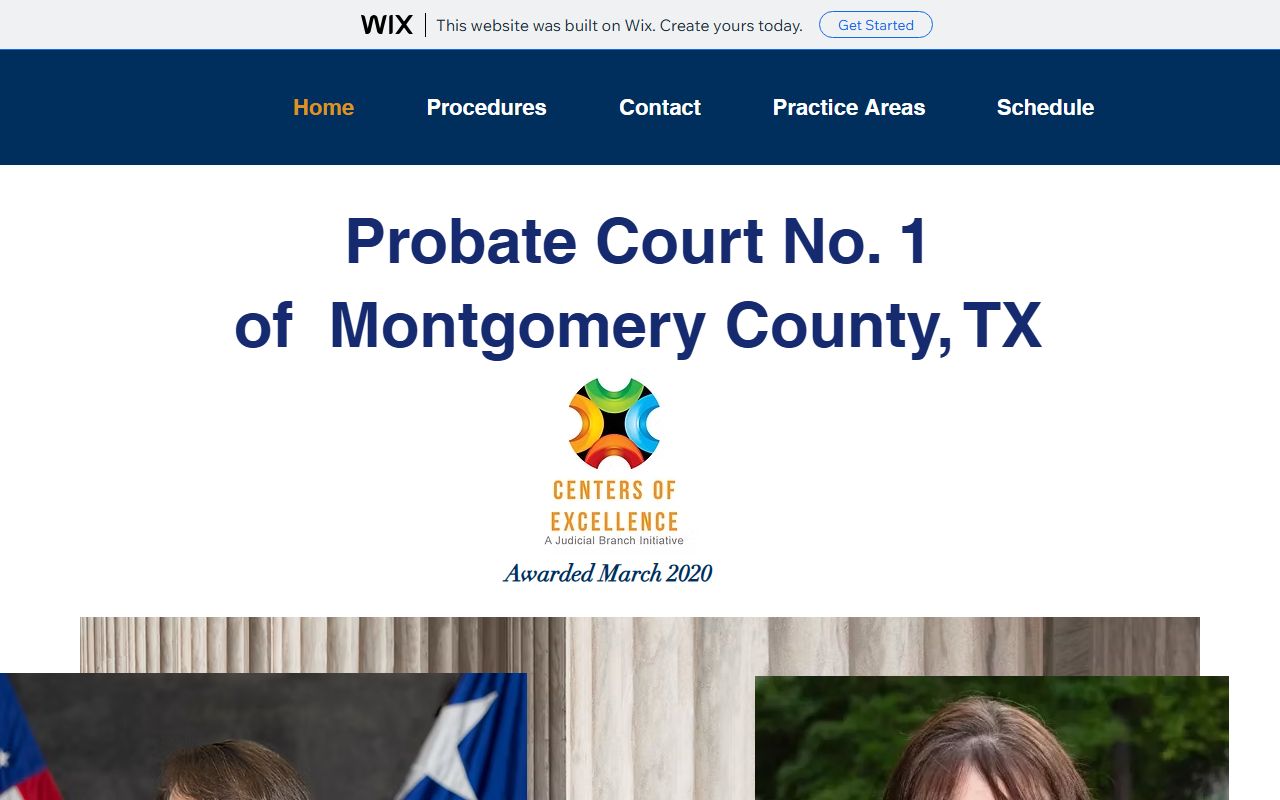
The page also notes the recent conversion of County Court at Law No. 2 into a statutory probate court, a sign of rising probate demand.
Probate Court No. 1
Atrium Building, 210 West Davis
Conroe, TX 77301
936-539-7832
Judge Claudia Laird
How to Search Montgomery County Probate Records
Probate cases sit on the County Clerk side of the county case system, not the District Clerk side. Use the County Clerk Odyssey Public Access portal and pick the Civil and Probate Case Records location. Search by a case number if you have one, or by the name of the decedent, the applicant, or another party. The court calendar location shows probate hearing settings.
Spelling counts, and a partial name can pull a wider list. If a search returns nothing, check the name format and confirm the matter is a county probate case, not a district court file.
Keep two record sets apart. The Odyssey civil and probate search shows the court case, with its filings, hearings, and orders. The County Clerk Official Records Search is a separate tool for recorded instruments, such as a deed that passes from an estate. A probate case may lead to a recorded deed, but the case docket and the recorded document live in different systems. Search the case first, then move to recorded records if property changed hands.
| Field Label | Type | Required | Notes / Format |
|---|---|---|---|
| Select a location | Dropdown | Yes | Choose Civil and Probate Case Records |
| Case number | Text | No | Use if you already know the number |
| Party / decedent / applicant name | Text | No | Full or partial name, depending on results |
| Court calendar | Location option | No | Use for probate docket settings |
The County Clerk civil and probate search opens from the same Odyssey system the county uses for other county court records.
You can reach it through the official County Clerk civil and probate search.
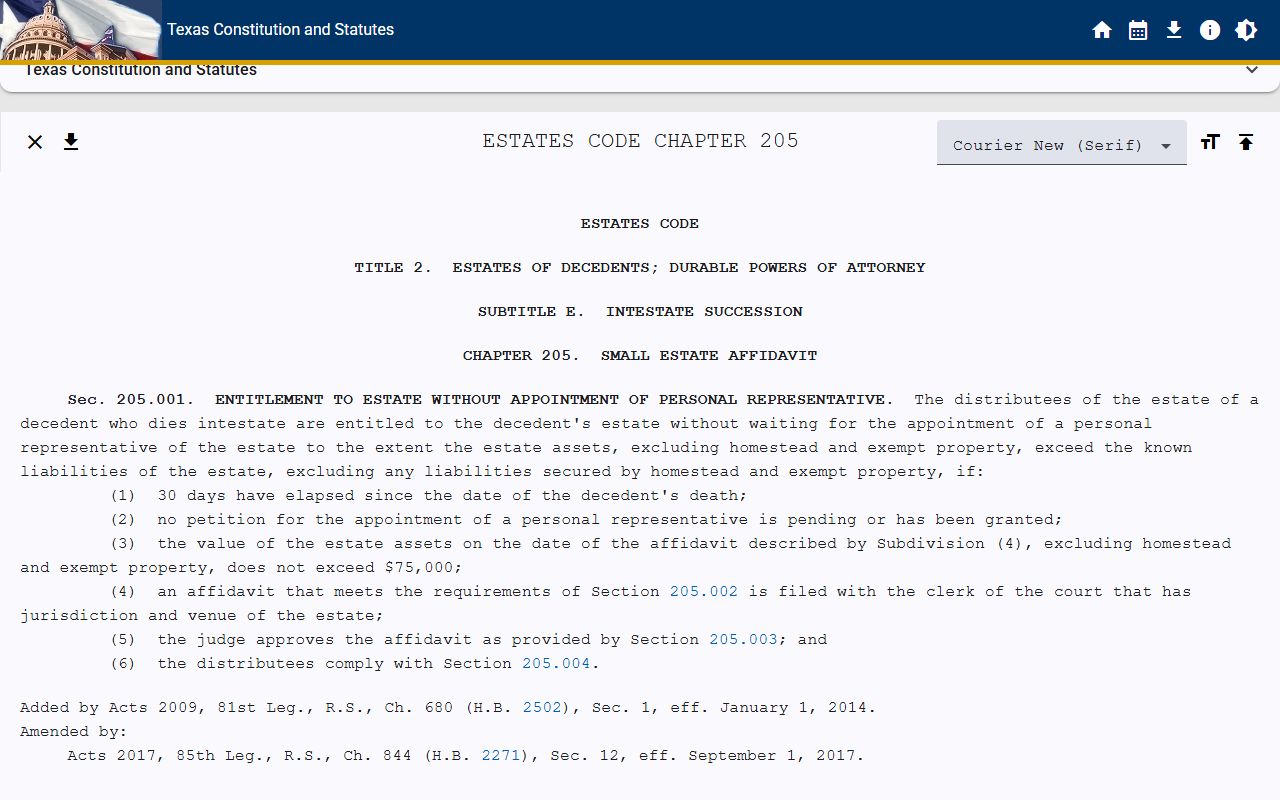
The Texas Estates Code sets the filing and record rules that shape what you find in a probate case.
Types of Montgomery County Probate Cases
Probate is broader than just reading a will. The court handles several case types, and each creates its own record. Some estates need full administration. Others move through faster tools when the estate is small or the will is clear. Guardianship cases are a separate track for people who need protection.
The list below shows the main filings you may see in a Montgomery County probate search.
- Application to probate a will and letters testamentary.
- Letters of administration when there is no will.
- Muniment of title and determination of heirship.
- Small estate affidavit and independent or dependent administration.
- Guardianship of an adult or a minor, with inventories and annual accounts.
Each case also generates notices to creditors and heirs, plus court orders that admit a will or appoint an executor, administrator, or guardian.
Not every estate needs full administration. A muniment of title can transfer property under a clear will without a long administration. A small estate affidavit can work when the estate is modest and there is no will. A determination of heirship sorts out who inherits when the heirs are not clear. Picking the right tool early can save an estate months of court time, which is why many families speak with an attorney before they file.
The Montgomery County Probate Process
Probate follows a set order, though the exact path depends on the estate. The steps below give the common route for an estate with a will. Guardianships add ongoing reporting and court oversight that estate cases may not need.
- Decide whether probate is needed. Assets with named beneficiaries or survivorship rights may pass outside probate, while titled property often requires it.
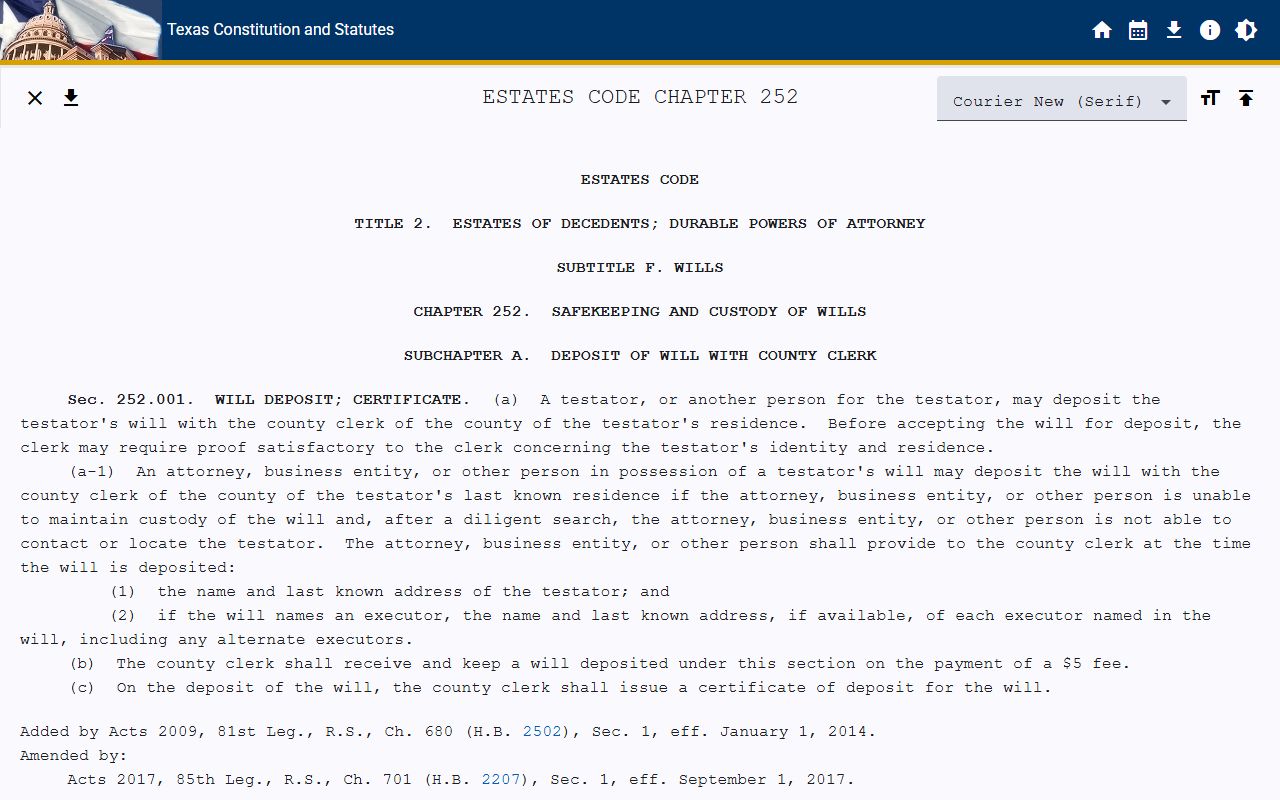
- Find out whether there is a will. Texas Estates Code Chapter 252 covers depositing a will with the clerk for safekeeping.
- File the proper application with the County Clerk and probate court.
- Pay the filing fee, or seek a waiver where allowed.
- Provide the required notices, posting, or publication.
- Attend the hearing, prove the will or heirship, and ask for appointment.
- The court signs an order, and the clerk issues letters testamentary or of administration.
- The representative gives notice to creditors, collects assets, files an inventory, pays valid claims, and distributes the property.
Wills can be filed with the clerk for safekeeping long before a person dies.
That safekeeping rule sits in Texas Estates Code Chapter 252.
Once a will is admitted, the rest of the estate steps follow under the clerk's record.
Probate Terms in Montgomery County Records
Probate files use words that are easy to mix up. A short glossary helps you read a record without guessing. These terms show up across estate and guardianship cases.
- Testator
- The person who made the will.
- Executor
- The person a will names to settle the estate.
- Intestate
- Dying without a valid will, so state law decides who inherits.
- Guardianship
- A court case that names someone to care for a person or manage their estate.
- Conservatorship
- A court role to manage another adult's affairs when they cannot.
Montgomery County Guardianship Records
Guardianship is a major part of the probate court's work. A guardianship protects a person who cannot care for themselves or handle their property. The court may name a guardian of the person, a guardian of the estate, or both. Texas law treats guardianship as a last resort, so the court weighs less restrictive options first. Once a guardian is appointed, the case does not simply end. The guardian files inventories, annual reports, and accountings, and the court keeps watch for as long as the guardianship lasts.
Two kinds of guardianship show up most often. One is guardianship of a minor, where a child needs an adult to manage an inheritance or their care. The other is guardianship of an incapacitated adult, such as an older person with dementia or an adult with a serious disability. Both run through the same Montgomery County statutory probate court, and both create a record the County Clerk holds.
A guardianship file can hold sensitive details about health, capacity, and money. Parts of the record may be restricted even when the case sits on the public docket. The clerk still issues certified copies of the public portions on request.
Montgomery County Probate Fees and Copies
Probate filing and copy fees are set by the county, not by guesswork. The County Clerk is the office to ask for the current amount. A plain copy costs less than a certified copy, because a certified copy carries the clerk's seal that courts and title companies require. An online search can find a case, but a certified document still comes from the clerk.
| Item | Where to Confirm the Amount |
|---|---|
| Application to probate a will | County Clerk probate fee schedule |
| Letters testamentary or of administration | County Clerk |
| Certified copy | County Clerk (adds a certification charge) |
| Plain copy | County Clerk |
For the most current fee, contact the Montgomery County Clerk, which records and certifies probate documents.
Restricted Probate Information
Most estate files are open, but not every part is public. Guardianship cases can hold private details about a person's health and finances. Mental health information is protected by Texas law. Records that name minors, bank account numbers, or medical conditions may be redacted or sealed. A certified copy may arrive with some items removed.
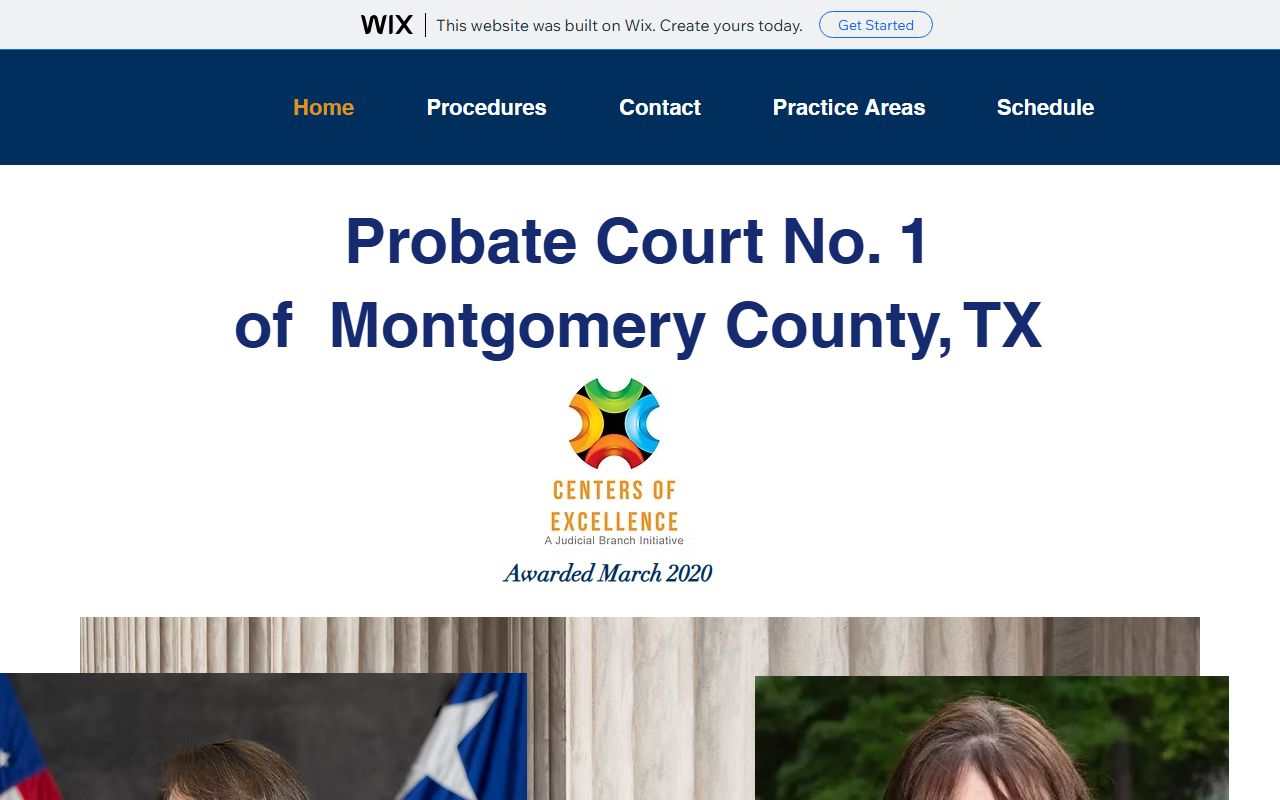
The official linked probate court site offers more guidance for families working through a case.
You can view it through the linked Probate Court No. 1 site from the County Clerk resources.
Note: Clerks can give you forms, fees, and filing steps, but they cannot give legal advice or tell you whether an estate needs full administration.