
How to Confirm a Montgomery County Inmate Release
The fastest way to check a Montgomery County release is the jail roster. Search by name. If the person still shows, they are held. Once that name drops off the roster, the Sheriff's Office treats them as released from MCSO Jail custody. The roster updates as bookings and releases are processed, so a name can vanish at any hour.
A roster search alone does not always tell the full story. The listing may lag a few minutes behind real events, and a common name can return more than one match. So check the booking details when you can. If you still are not sure, call and ask staff to confirm.
Inmate inquiries go through the jail by phone. Call 936-760-5800, press option 1 for the jail, then choose submenu 5 for inmate and bonding information. Staff can tell you if a person is in custody and explain the bonding steps. For the booking side of a person's stay, the inmate records page walks through the roster and lookup system in more detail.
Why a Montgomery County Inmate Release Can Take Hours
Release is rarely instant. The jail processes bonds 24 hours a day, but it works them in the order received. So a bond posted at a busy time waits its turn. Staff cannot promise a set release time because many things affect each case. A name may stay on the roster for hours after the paperwork starts.
Court-ordered releases add another layer. When a judge orders someone freed, jail staff may not get the court paperwork until after 5:00 p.m. Sometimes the court must wait for a judge's signature, and the paperwork lands the next day. Until that signed order arrives and all charges or holds clear, the person stays in custody.
One more step happens before anyone walks out. All inmates are checked for new warrants before release. A fresh warrant or a hold from another agency can stop a release that looked ready to go. This is normal, and it is why a roster name can linger longer than family expects.
Note: A name that lingers on the roster after a bond is posted usually means processing is still underway, not that the release was denied.
Searching State Released Montgomery County Inmates
Not every release means a person goes home. Some leave the county jail because they were sent to state prison or a state jail. When that happens, the local roster will no longer show them. The next place to look is the Texas Department of Criminal Justice. Its offender search covers people held, paroled, or discharged at the state level.
The TDCJ tool lets you search by name or by a state ID number. A last name usually drives the search, and adding a first name trims the list. If you have a TDCJ number or an SID number, use it for an exact match. The system can also show offense data, a facility, and parole or discharge status where that data is public.
Use this search when someone moves from local custody to a state unit, or to confirm a state-level release date. It pairs well with the local roster, since one shows county custody and the other shows the state side. For the bigger custody picture, the jail population page explains how the county tracks who is held and where.
The TDCJ offender search and its name and number fields appear on the Texas Department of Criminal Justice offender search.
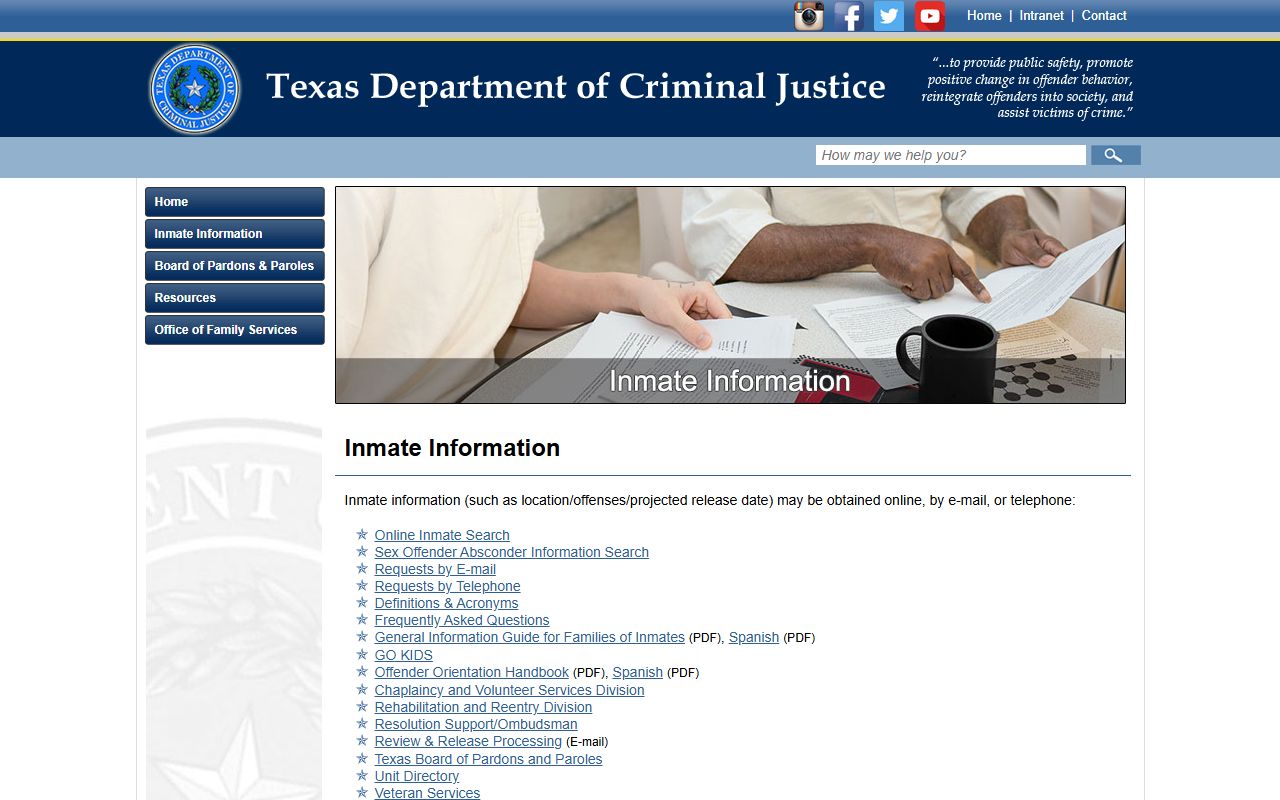
The table below lists the common search fields on the TDCJ offender search and how each one is used.
| Field Label | Type | Required | Notes |
|---|---|---|---|
| Last Name | Text | Usually required | Drives the name search; pair with other details |
| First Name | Text | Optional | Narrows a common-name result |
| TDCJ Number | Text | Optional | Exact state prison identifier |
| SID Number | Text | Optional | State identification number |
| Gender / Race / Age | Filters | Optional | May vary by the current TDCJ interface |
Searching Federal Released Montgomery County Inmates
Some cases are federal, not state or county. A person charged in federal court can pass through local jail and then move into federal custody. For that, the county roster and the state search will not help. The Federal Bureau of Prisons runs its own inmate locator, and it stays useful even after a release.
The BOP locator works two ways. You can find a person by number or by name. The number option accepts a BOP register number, a DCDC number, an FBI number, or an INS number. The name option asks for a first, middle, and last name, plus race, age, and sex to refine the result. A Search button runs the query.
Released federal prisoners often remain searchable by their register number or name, which helps confirm a past release date. So even if someone left federal custody, the record may still surface. This matters when a county case and a federal case overlap for the same person.
The find-by-number and find-by-name fields shown here come from the Federal Bureau of Prisons inmate locator.
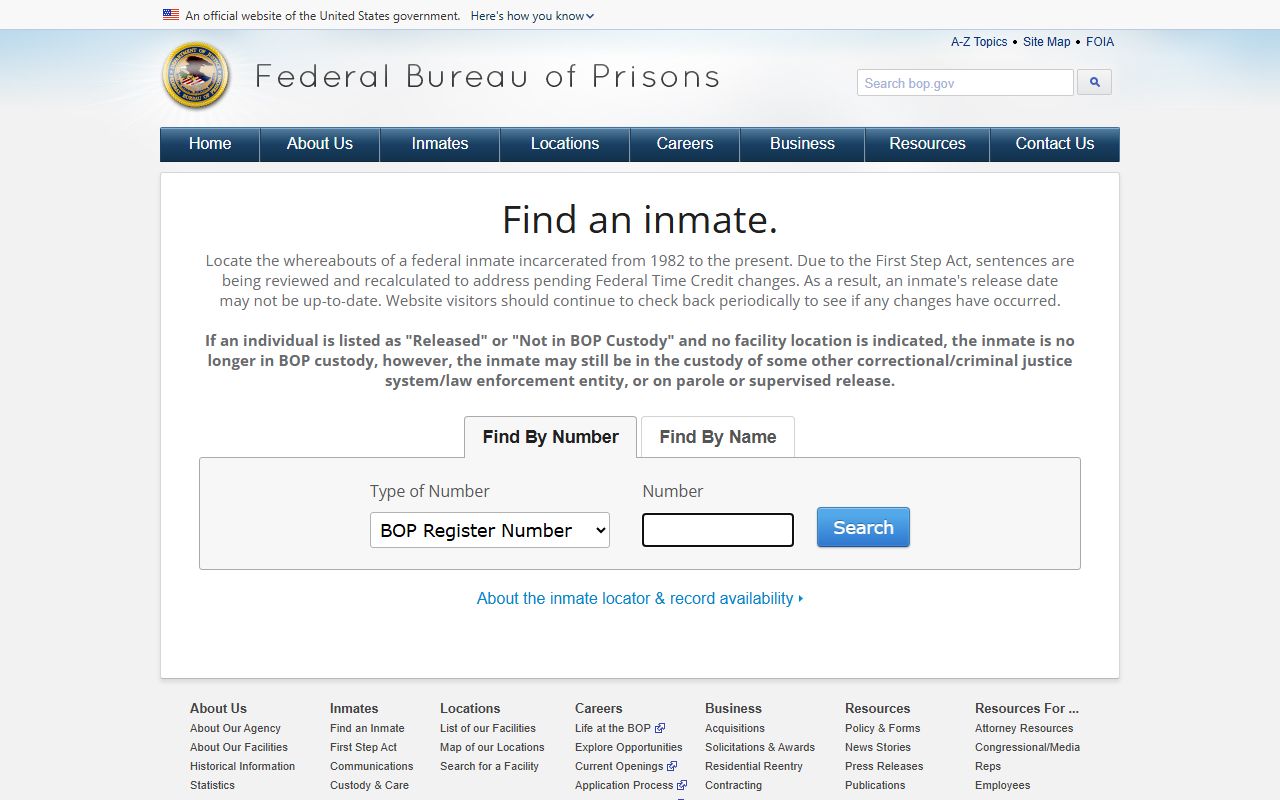
Here are the main search options on the BOP locator and what each one expects.
| Field Label | Type | Required | Notes |
|---|---|---|---|
| Find by Number | Tab / radio | Optional | BOP register, DCDC, FBI, or INS number |
| Find by Name | Tab / radio | Optional | First, middle, last; race; age; sex |
| Search | Button | n/a | Runs the query and returns matches |
Release Notifications for Montgomery County Inmates
You do not have to check a roster all day. VINELink lets you register for alerts about a person in custody. Pick Texas, then search for the inmate, and sign up to be told about changes. The service can warn you when custody status shifts, such as a release or a transfer.
This helps crime victims and families who want a heads-up the moment things change. Notification choices and search options vary by state and by the agency that feeds the system. Some Texas agencies are tied in deeply; others share less. So set up an alert, but keep the local roster as a backup check.
To start, select Texas and search by name or a case identifier where the agency allows it. Then add phone, email, or text alerts as offered. The custody-status search and the Texas selection appear on the VINELink victim notification portal.
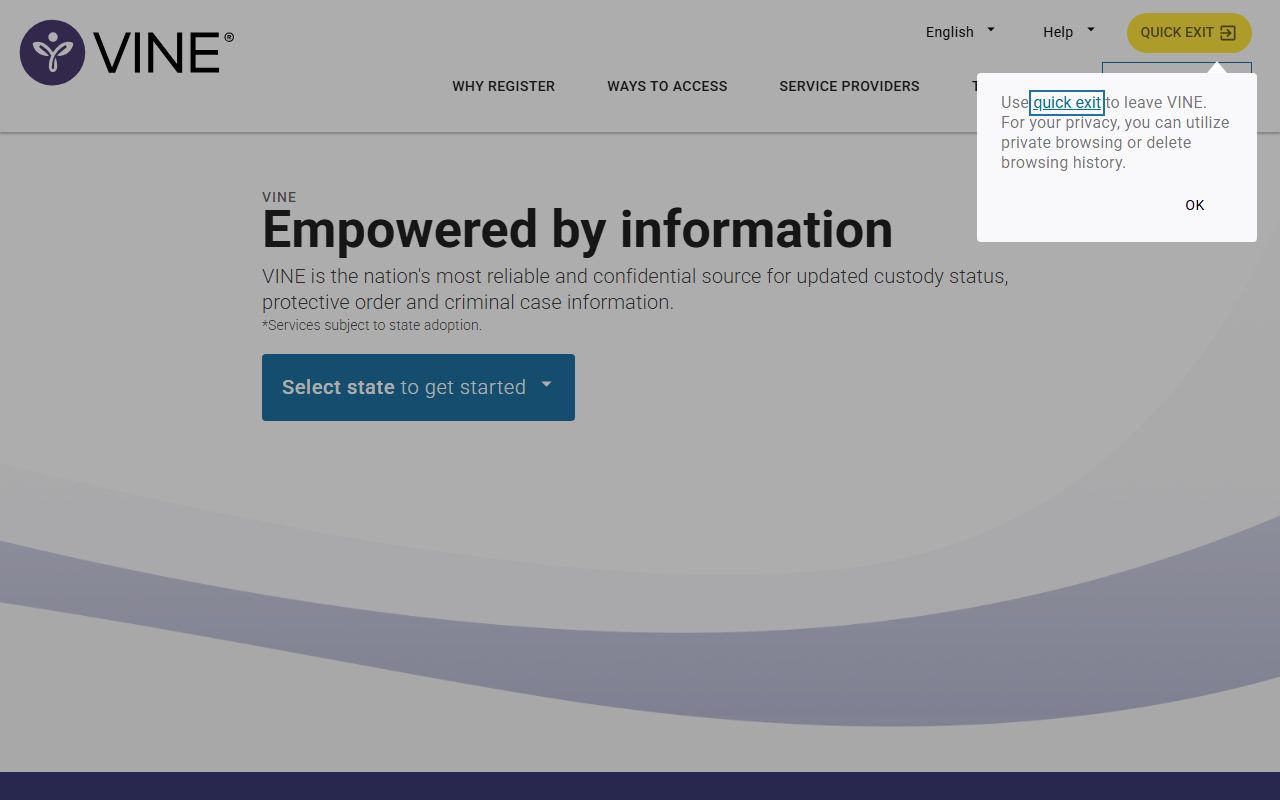
VINELink does not replace the official jail roster, but it works alongside it. The roster confirms current custody. VINELink pushes a notice so you do not have to keep checking yourself.
Waller County Overflow and Montgomery County Inmate Release
Montgomery County has at times run short on jail space. To handle that, the county partnered with Waller County to house some inmates. This can confuse families who try to track a release, since the person sits in a different county. But the records stay tied to Montgomery County.
An inmate sent to Waller County still shows on the Montgomery County Jail roster. The housing location reads "Waller Co Jail." So a name search here still finds them. Visitation, mail, and commissary for those inmates follow Waller County rules, while their property stays in Montgomery County.
The key point for release tracking is simple. Inmates housed in Waller County are still released through Montgomery County. So when the Waller County overflow listing drops off the Montgomery roster, treat it the same as any local release. Confirm by phone if the timing is unclear.
The Texas Sex Offender Registry After Inmate Release
Some people must register after release. Texas keeps a public sex offender registry through the Department of Public Safety. It is not a custody tool, but it shows post-release registration data where the law requires it. This is one way the public can see where a registered person lives after leaving custody.
The DPS registry can be searched a few ways. You can look by name, or by a place such as a city, county, or ZIP code. There is also a filter for an institute of higher education. Map and list controls help you view results and open a profile. None of these fields are required, so you can search broadly.
Registry data is public, yet it is separate from the jail roster and from the state and federal custody searches above. A person can be released and still carry a registration duty. Use the registry for post-release residence information, not to confirm whether someone is in or out of a jail cell.
The search options below reflect the fields on the Texas DPS sex offender registry.
| Field Label | Type | Required | Notes |
|---|---|---|---|
| Name | Text | Optional | Search by an offender's name |
| Address / City / County / ZIP | Text / dropdown | Optional | Geographic search; use the city or county |
| Institute of Higher Education | Filter | Optional | Used where it applies |
| Map / List controls | Controls | Optional | View mapped addresses and open profiles |
Parole, Probation, and Rights After a Montgomery County Release
A release is not always the end of the case. Many people leave custody on parole or probation, which means rules still apply. Parole follows a state prison term. Probation, also called community supervision, can replace or follow jail time on county and district cases. Both come with conditions a person must meet.
State-level parole and supervision status can show up in the TDCJ offender search noted above. Court supervision tied to a local case sits with the courts. For felony court status, contact the District Clerk. For misdemeanor court status, contact the County Clerk. The warrant records page also helps, since a violation can lead to a new warrant.
Civil rights shift after release too. In Texas, voting rights generally return once a felony sentence is fully discharged, which includes incarceration, parole, and any supervision. Confirm voter status with the Texas Secretary of State before relying on it. Firearm rights are more restricted, and the rules are complex, so a person should get legal advice before assuming any firearm right has been restored.
Reentry Resources for Released Montgomery County Inmates
Life after release brings real hurdles. Housing, jobs, court fees, and family law issues can pile up fast. Several free and low-cost resources help. They do not erase a record, but they can guide a person through forms, hearings, and rights. Start with the statewide self-help tools, then look at legal aid and referral options.
For plain-language legal help, use TexasLawHelp. It offers forms and guides on topics like expunction, nondisclosure, family law, and fee waivers. For full legal aid, eligible residents can turn to Lone Star Legal Aid, the regional civil legal aid provider for many southeast Texas counties. If you want a private lawyer, the State Bar of Texas Lawyer Referral and Information Service can match you with one.
The county also has its own help. Montgomery County lists Veterans Services and a Veterans Treatment Court in its official navigation, which can support veterans coming out of custody. These programs may connect a person to benefits, treatment, or a specialty court path. For criminal background context that affects reentry, the arrest records page explains how local records are kept and corrected.