
Montgomery County Marriage Licenses and the County Clerk
Marriage licenses in Montgomery County come from one place. The County Clerk issues them. The current clerk is L. Brandon Steinmann. His office handles vital records, which include marriage licenses along with birth and death certificate services. So if you plan to marry in the county, the County Clerk is your first stop. The same office later keeps the recorded marriage record once the signed license comes back.
The main County Clerk office sits at 210 West Davis in Conroe, TX 77301. The phone is 936-539-7885. The clerk runs two more sites. The East County Annex is at 21130 Legion Rd in New Caney. The South County Annex is at 1520 Lake Front Circle in The Woodlands. Hours differ a bit by site. So check before you go.
This split matters for your search. Marriage work lives with the County Clerk. A divorce is a court case. It is kept by the District Clerk. The County Clerk also runs the official records side for recorded items. To learn how that broader office works, see the County Clerk page. For the office that holds divorce files, see the District Clerk page.
The County Clerk homepage lists Courts, Public Records, Vital Records, and Public Search as its main parts. Marriage License falls under Vital Records there.
You can confirm the current locations and services on the official Montgomery County Clerk homepage.

That homepage is the safest starting point for any Montgomery County marriage license question.
Montgomery County Marriage License Requirements
Texas Family Code Chapter 2 sets the rules for marriage licenses. Those rules apply in every county, including Montgomery County. You can read the full text in the Texas Family Code Chapter 2. The basics are simple. Both people must show proof of identity and age. The clerk checks that you meet the age rules under state law.
There is a waiting period after the clerk issues the license. The marriage cannot happen during that short window unless an exception applies. Some applicants qualify for a waiver. The license also has a shelf life. If you do not use it in time, it expires. Then you must start over. So plan the timing around your wedding date.
After the ceremony, the signed license goes back to the county clerk. The clerk records it. That recorded record becomes the official marriage record. An authorized officiant must perform the ceremony. State law lists who can do that. The list includes judges and certain religious and civil officers. Keep the license safe until it is returned. It is the document that makes the record.
Texas also recognizes informal marriage, often called common-law marriage. A couple can meet the statutory test and, in some cases, file a declaration of informal marriage with the county clerk. That gives a formal record without a traditional license and ceremony. So Montgomery County marriage records can include both formal licenses and informal declarations.
The Twogether in Texas Discount on Montgomery County Marriage Licenses
Texas runs a program called Twogether in Texas. It offers premarital education to engaged couples. The state gives a reward for finishing it. When you complete an approved course, you get a certificate. That certificate reduces or waives the state portion of your marriage license fee in Montgomery County.
The discount is real. The exact dollar figure is not. Fee amounts change. The official source is the County Clerk FY25 Vital Fee Sheet. That sheet lists the marriage license fee. It also shows how the Twogether certificate changes it. Some parts of the fee may still apply even with the certificate.
So check the current fee sheet first. Bring the Twogether certificate when you apply. Hand it to the clerk with your other papers. The clerk applies the discount at the counter. Do not rely on an old amount you read somewhere. The published sheet controls.
How to Apply for a Montgomery County Marriage License
The application happens at a County Clerk location, and both people usually need to take part. The steps below follow the order most couples use. Read the fee sheet first, then gather your papers, then visit the clerk. A little prep keeps the visit short.
- Review the County Clerk marriage license page and the FY25 Vital Fee Sheet for current rules and the current fee.
- Gather a government-issued photo ID for each applicant and any Twogether in Texas certificate you earned.
- Visit a County Clerk location in Conroe, New Caney, or The Woodlands during posted hours.
- Pay the required fee at the counter, and present the Twogether certificate so the clerk can apply the discount.
- Observe the Texas waiting period and the expiration window before you set the ceremony date.
- Complete the ceremony with an authorized officiant, such as a judge or a recognized religious or civil officer.
- Return the signed license to the County Clerk so it can be recorded.
- Request a certified copy of the marriage license from the County Clerk when you need proof.
The form itself asks for a set of fields. The table below lists the main ones from the County Clerk process. Names must match the IDs you bring, so use full legal names.
| Field Label | Type | Required | Notes |
|---|---|---|---|
| Applicant 1 full legal name | Text | Yes | Must match the photo ID. |
| Applicant 2 full legal name | Text | Yes | Must match the photo ID. |
| Date of birth / age | Date / text | Yes | Used to confirm age eligibility under state law. |
| Government ID information | Text / in person | Yes | A valid photo ID is checked at the counter. |
| Social Security number or statement | Text | Yes if applicable | Protected from public display. |
| Premarital education certificate | Document | Optional | Twogether in Texas discount or waiver. |
| Formal or informal marriage | Option | Yes | Records may note a formal license or an informal declaration. |
| Contact phone / email | Text | Office workflow | Used by staff for processing. |
If anything on the list is unclear, call the office before you go. Staff can tell you what to bring, but they cannot give legal advice.
Searching Montgomery County Marriage Records
Once a license is recorded, it becomes a public record you can search. The County Clerk keeps these as recorded vital records. The tool to use is the County Clerk Official Records Search. It covers recorded instruments, which include marriage records along with deeds and other filings.
You can search a few ways. Use the names on the record. Use a document number if you have it. Or set a recorded date range to narrow a common name. You can also pick a document type. The search shows a "certified through" date. That tells you how current the index is.
The records side overlaps with other county filings. So the same portal returns more than just marriage records. To see how the broader system works, the public records page walks through it. When you find the record, the certified copy still comes from the County Clerk. A screenshot of an online result is not an official document.
Note: A divorce will not show up in the County Clerk marriage search, because divorce is a District Court case held by the District Clerk.
Montgomery County Divorce Records Are District Court Cases
Divorce is not a vital record. The County Clerk does not handle it. It is a court case. In Texas, divorce is a family-law matter heard in district court. So the file lives with the District Clerk, Melisa Miller. The portal to use is the District Clerk Odyssey Civil and Family Case Records search. Pick the Civil and Family location. Then enter a party name or a case number.
Texas Family Code Chapter 6 governs divorce. You can read it in the Texas Family Code Chapter 6. That chapter sets the residency rules and the grounds. Texas allows a no-fault divorce based on insupportability, which means the marriage broke down with no reasonable chance to fix it. The law also lists fault grounds, such as cruelty or abandonment, that a spouse may plead instead.
A divorce file can show the parties, the court, the filing date, and the docket. Many pleadings and orders are public. But the law shields some details. Information about a child, finances, medical matters, or a protective order may be redacted. So a public search may show the case while hiding the sensitive parts.
The District Clerk Odyssey search is the right tool for a divorce, an annulment, or a related family case.
You can reach the divorce case search through the official District Clerk Odyssey civil and family search.
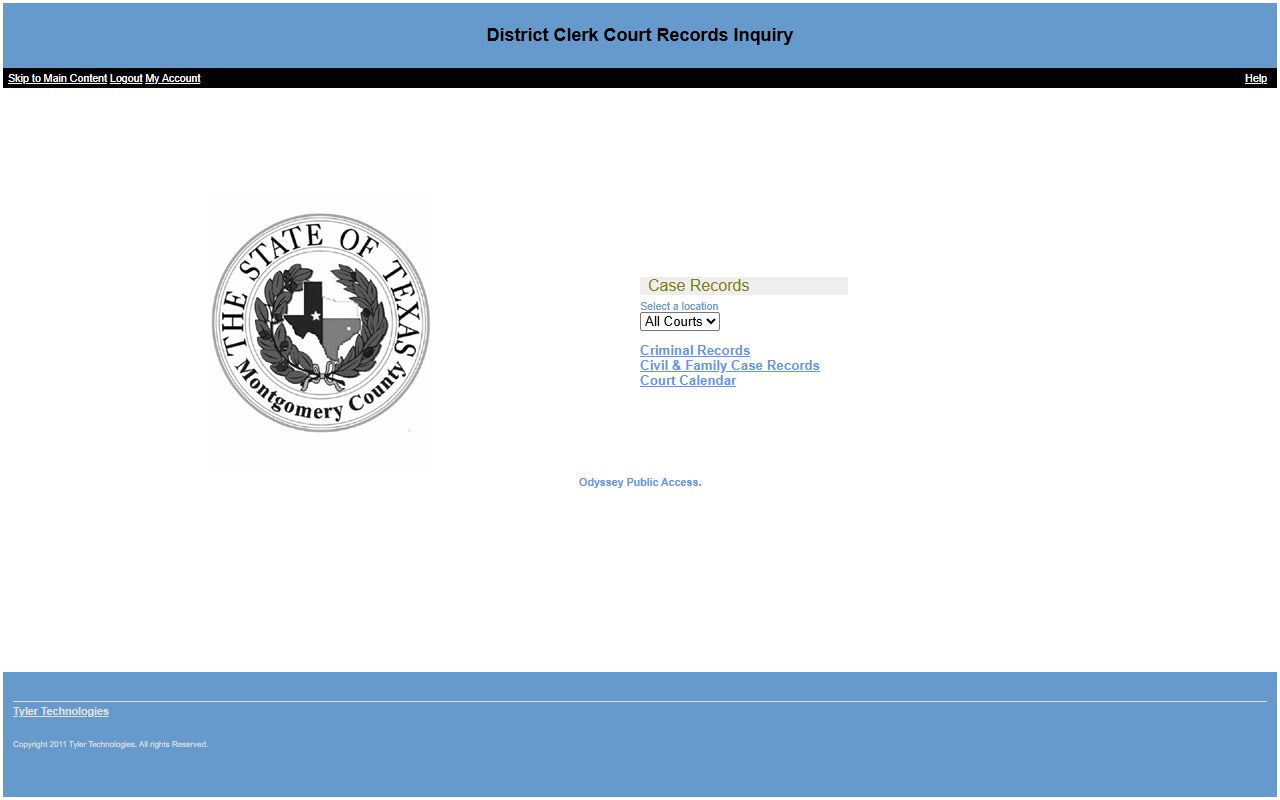
If a divorce does not appear there, double-check the name spelling and the date range, because older cases can be harder to find. For the wider set of court files, the court records page explains how the two clerks divide their work.
How to File for Divorce in Montgomery County
Filing a divorce starts with the District Clerk, not the County Clerk. That single fact trips up many people. The steps below show the usual path from start to final decree. The court has standing orders and local rules, so follow them closely.
- Confirm that you meet the Texas residency rule and that Montgomery County is the proper venue.
- Prepare the petition, using an attorney, approved self-help forms, or a legal aid group.
- File the petition with the Montgomery County District Clerk, not with the County Clerk.
- Pay the filing fee, or file a statement of inability to afford payment if you qualify.
- Serve the other spouse with the papers, or have them sign a waiver of service.
- Follow the court's standing orders and local rules while the case is open.
- Address property, debt, children, and support as the case requires.
- Present the final decree to the judge for a signature.
- Request certified copies of the signed decree from the District Clerk.
A clerk can hand you forms and explain the process. A clerk cannot tell you what to write or how the law applies to your case. For legal advice, talk to a lawyer or a legal aid office. The county courts and probate work, by the way, run on a separate track you can read about on the County Clerk page.
Certified Copies and Confidential Montgomery County Family Records
There is a difference between a plain copy and a certified copy. A certified copy carries the clerk's seal. It states that the copy is true. Courts and agencies want that version for legal use. A printout from an online portal is not certified. So do not rely on it for an official purpose.
Where you get the certified copy depends on the record. A marriage license copy comes from the County Clerk. A divorce decree copy comes from the District Clerk. Bring the names, the case or document number, and any dates you know. A clear request moves faster than a broad one.
Family records also carry strong privacy protection. In a divorce file, details about a child, finances, medical care, or a protective order may be redacted. Adoption and some child-welfare records are confidential by statute. They are not open at all. So a released copy may arrive with parts blacked out. The fee table points you to the official sources before you pay.
The table that follows lists where to confirm each fee. Always check the official source, since amounts change over time.
| Item | Where to Confirm the Amount |
|---|---|
| Marriage license | County Clerk FY25 Vital Fee Sheet |
| Marriage license with Twogether in Texas certificate | County Clerk FY25 Vital Fee Sheet (reduced or waived state portion) |
| Certified copy of marriage license | County Clerk FY25 Vital Fee Sheet |
| Certified copy of divorce decree | District Clerk (records and research) |
For probate matters, such as a will or an estate after a death, the path is different again. See the probate records page for that.
The County Clerk also runs its own Odyssey portal for county court and probate matters, which is separate from the divorce search.
You can view that county-side search through the official County Clerk Odyssey civil and probate search.
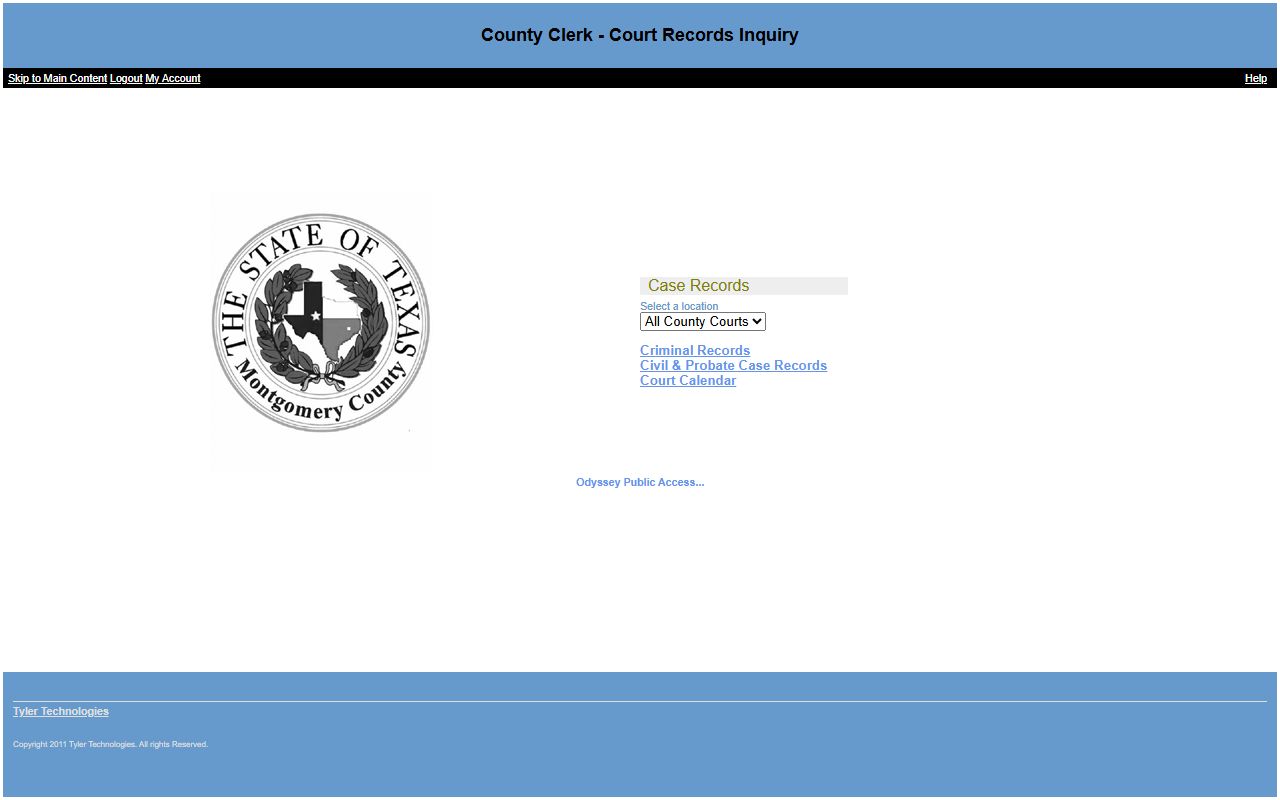
Use that county portal for probate and county civil matters, and use the District Clerk side for a divorce.